
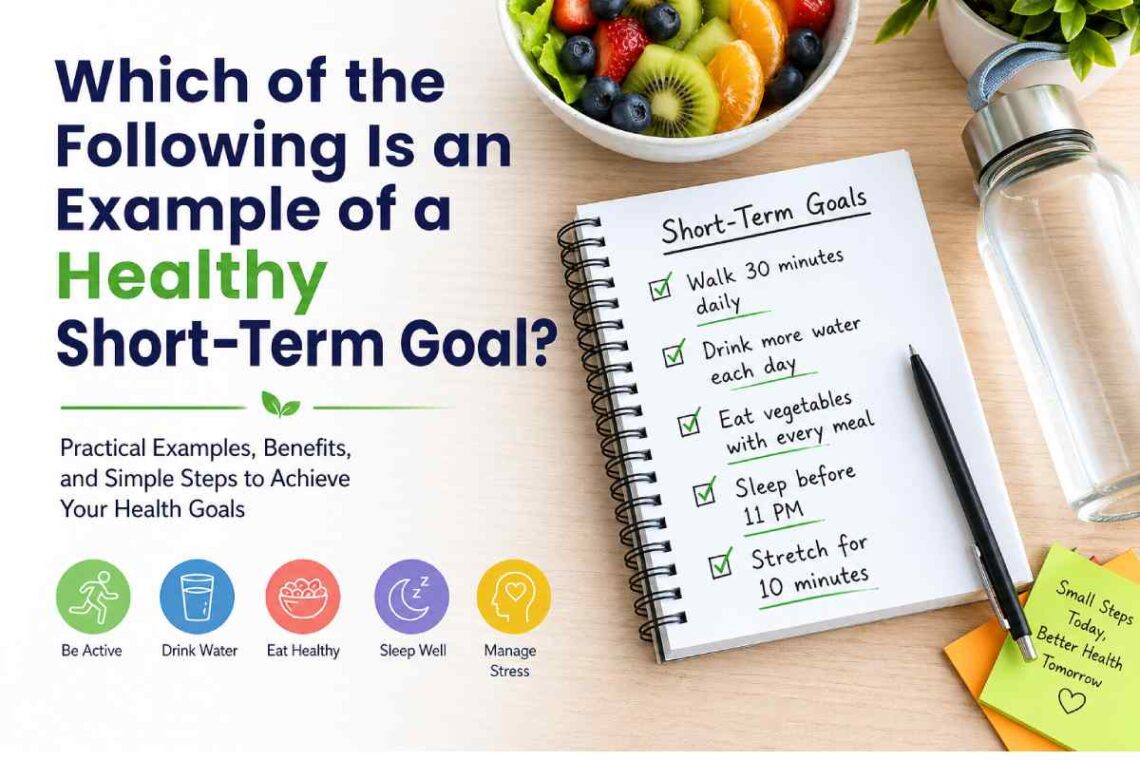
Everyone tells you to adopt healthy habits, but making such big changes to the current lifestyle seems daunting, and is in fact, overwhelming. So, when you’re considering fitness professionals, dietitians, health coaches, the main focus will be on forming short-term healthy habits, so when you’re asked “Which is a healthy short-term goal”, this typically refers to a minor goal that you can complete within a small amount of time. In this article we are going to explain healthy short-term goals, how they work, and some great practical examples along with tips on how to write one for yourself.
Definition Snippet Block
The perfect achievable short-term goal should be a Feasible well-being goal that is to be achieved within days or weeks for example, working out 3 days each week, decreasing cola consumption, sleeping 8 hours each night, having a vegetable with each meal every day for a month.
Healthy Short Term Goal is what?
A health short term goal is a small, easy step toward a better physical or mental state.
- Specific
- Time-based
- Realistic
- Measurable
- Action-focused
Short-term goals are different from long-term ones in that short-term goals attempt to bring about some immediate change in one‘s behavior and not final End results.
Example:
| Goal Types | Example |
| Temporary goal | Walk 30 min daily for 2 weeks |
| Longstanding goal | Recover overall circulatory fitness |
| Temporary goal | Drink eight glasses of water daily |
| Long-term goal | Maintain healthier hydration habits for life |
Short term goals seem to be easier to hold because it is creating smaller milestones and the pressure less.
Which of the Following’s are Example of Healthy Short-Term Goal?
Here are the following with strong examples
- Walking after dinner for 20 minutes every day this week
- Replacing sugary drinks with water for one month
- Sleeping before 11 PM for two weeks
- Eating fruit with breakfast every morning
- Do stretching daily 10 min after the workout
These objectives are good because they are realistic.
Example of Un-healthy Goal
Not every short-term goal is healthy or supportable.
| Strong Goal | Unhealthy Goal |
| Exercise 3 times weekly | Lose 10 kg in one week |
| Reduce takeaway meals gradually | Stop eating entire food groups suddenly |
| Sleep 7–8 hours nightly | Exercise excessively every day |
| Drink more water daily | Follow unsafe detox routines |
Healthy goals should increase wellbeing and not create unhelpful mental or physical strain
Why the Short-Term Health Goals Matter
Short-term goals can support to long-term health achievement in several ways.
They Build Motivation
Little wins are usually confidence boosters. The fact that you have achieved one simple task makes forging the habit more natural in the future.
They Reduce Overwhelm
Large health transformations may feel difficult at first. Breaking them into smaller stages makes the process more approachable.
They Encourage Consistency
Health improvements usually depend more on regular habits than temporary intense effort.
They Care Mental Wellbeing
Realizable goals can reduce feelings of failure and defeat often associated with unrealistic wellness plans.
Common Types of Healthy Short-Term Goals
Changed people choose unlike goals depending on their lifestyle, age, and health priorities.
Goals of fitness
Examples include:
- Walking daily
- Joining a beginner yoga class
- Completing three home workouts weekly
- Attractive the stairs as a replacement for lifts
Nourishment Goals
Common examples include:
- Eating more vegetables
- Reducing processed snacks
- Drinking more water
- Preparing meals at home
Sleep Goals
Sleep-related goals may include:
- Limiting screen time before bed
- Following a regular sleep schedule
- Sleeping at least seven hours nightly
Mental Health Goals
Examples include:
- Journalling for 10 minutes daily
- Practising mindfulness exercises
- Taking the regular breaks from the social media
How to Create the Short-Term Healthy Goal
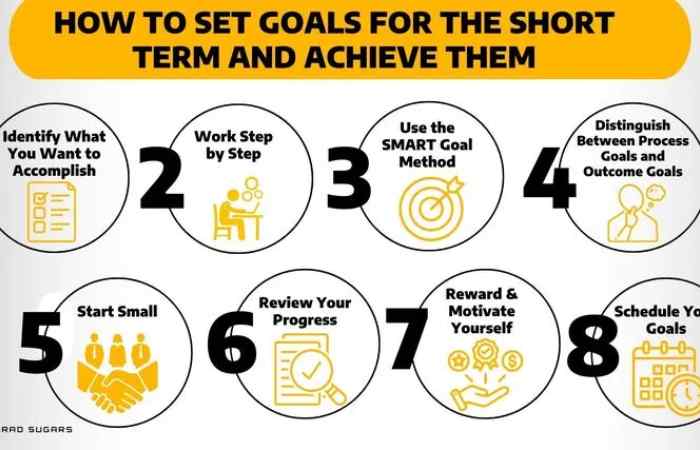
One of the best and useful method is the SMART framework.
| SMART Element | Meaning | Example |
| Specific | Clear objective | Walk daily |
| Measurable | Easy to track | 30 minutes |
| Achievable | Realistic | Beginner-friendly pace |
| Relevant | Supports wellbeing | Improves fitness |
| Time-bound | Includes deadline | For 14 days |
Example
“I will walk for 30 min right after the dinner for five days per week for the next 2 weeks.”
Workflow for Healthy Goal: Step-by-Step
Step 1 — Identify 1 Priority
Choose one area to improve first:
- Exercise
- Nutrition
- Sleep
- Stress management
Step 2 — Keep the Goal Small
Avoid dramatic changes initially. Smaller goals are easier to maintain.
Step 3 — Track Progress
Use:
- A notebook
- Mobile app
- Calendar reminders
- Habit tracker
Step 4 — Review Results
After two to four weeks:
- Assess progress
- Adjust expectations if needed
- Continue successful habits
Step 5 — Expand Gradually
Once a goal becomes routine, build upon it slowly.
Examples of Realistic Healthy Short-Term Goals
Here are practical examples suitable for many adults.
| Goal | Duration | Difficulty Level |
| Drink more water daily | 2 weeks | Easy |
| Walk 5,000 steps daily | 1 month | Beginner |
| Reduce fast food to once weekly | 3 weeks | Moderate |
| Stretch every morning | 2 weeks | Easy |
| Sleep before 11 PM | 1 month | Moderate |
These goals focus on behaviour rather than perfection.
Expectations Management: What Results Can You Realistically Expect?
Healthy short-term goals can improve wellbeing, but results are usually gradual.
Physical Changes May Take Time
Weight loss, muscle growth, or major fitness improvements often require months rather than days.
Habits Matter More Than Speed
Consistency is usually more important than intensity.
Setbacks Are Normal
Missing a workout or unhealthy meal occasionally does not erase progress.
Everyone Responds Differently
Age, lifestyle, stress levels, sleep, and medical conditions can influence results.
A balanced approach is generally more sustainable than extreme routines.
Mistakes People Make With Short-Term Health Goals
Setting Unrealistic Expectations
Trying to change everything at once can lead to burnout.
Choosing Outcome-Based Goals Only
Goals like “lose weight quickly” may feel discouraging if progress slows.
Behaviour-based goals often work better.
Ignoring Recovery
Rest and sleep are essential parts of health improvement.
Following Trends Without Research
Community media wellness trends are not always evidence-based.
Healthy Short-Term Goal line for Changed Age Groups
Teenagers
Good examples:
- Reduce sugary drinks
- Improve sleep routine
- Participate in sports regularly
Adults
Common goals:
- Increase physical activity
- Manage stress
- Expand eating behaviors
Elder Adults
Everyday goals:
- Daily walking
- Gentle stretching
- Waiting hydrated
Health goals should always consider the individual fitness levels and medical advice where required.
Comparison Healthy and Unhealthy Goal line Methods
| Factor | Healthy Approach | Unhealthy Approach |
| Exercise | Gradual increase | Excessive daily training |
| Food | Stable nutrition | Severe limit |
| Inspiration | Long-term constancy | Speedy fixes |
| Sleep | Regular schedule | Ignoring rest |
| Mental comfort | Supportable habbits | Guilt-driven routines |
Balanced goals are usually relaxed to maintain over time.
How Schools and Health Programmes Use Short-Term Goals?
Short-term goals are often used in educational settings and workplace wellness programmes, as they are easier to observe.
Illustrations include:
- Weekly activity challenges
- Hydration tracking
- Step-count competitions
- Stress management activities
These smaller targets can inspire the healthier daily choices without irresistible participants.
Numerical Tools That will Help
Most of the people use apps and vesture devices to support the healthy habits.
Popular structures consist of:
- Step tracking
- Sleep monitoring
- Water reminders
- Workout scheduling
- Mood journalling
However, the technology should support the healthy habits rather than create weight or passion.
When to Pursue Specialized Advice
Some health goals may require medical guidance.
Consider speaking with an healthcare specialized if:
- You have enduring medical situations
- You experience pain during exercise
- You have significant dietary restrictions
- You struggle with mental health concerns
The Professional guidance can help to ensure the goals remain safe and suitable.
Conclusion
It is beneficial to learn which of the following is an example of a healthy short-term goal? and that they will guide them to make better choices on health. Healthy short-term goals normally consist of realistic, obtainable and focused on realistic, daily activities rather than making dramatic change. Whether it is good sleep, healthy eating, exercising and relaxation, progress in small steps can harvest results that last long in the long term. Having representative anticipation will enable one to set practicable health goals.