
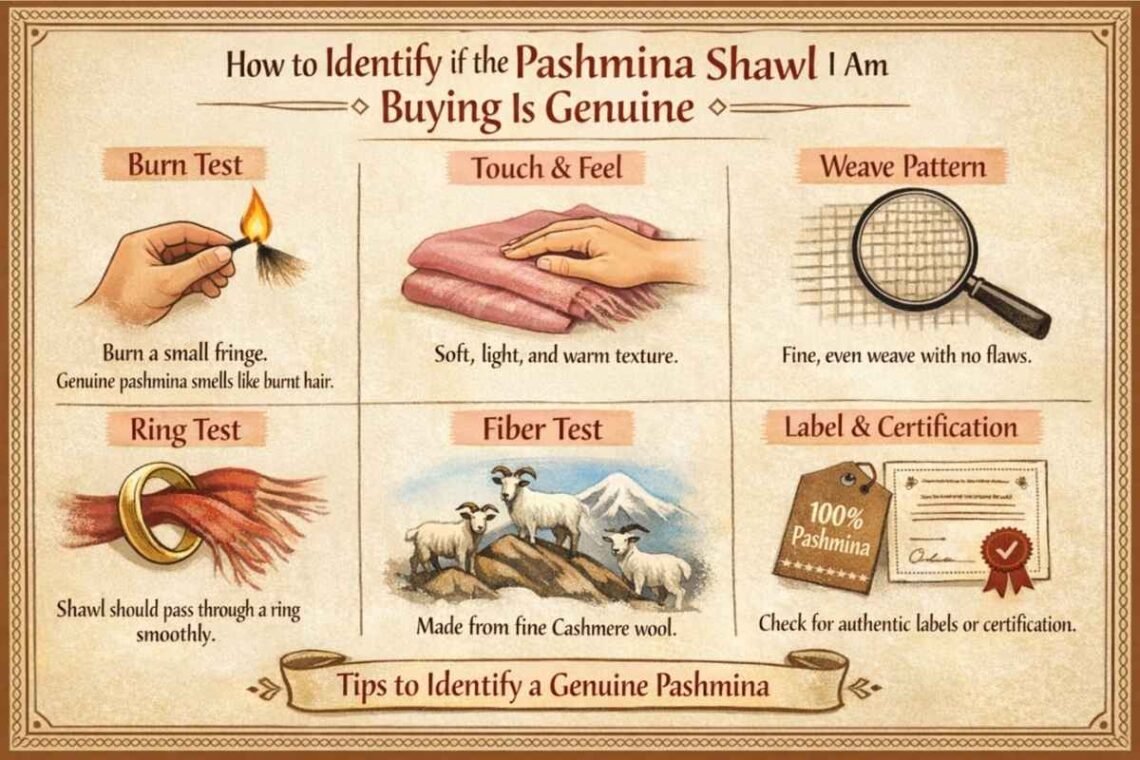
The allure of a Pashmina shawl is undeniable. Woven from the delicate undercoat of the Changthangi goat found in the high altitudes of Ladakh, a genuine piece is not just an accessory; it is an investment in heritage, warmth, and unparalleled softness . However, the popularity of this luxurious textile has flooded the market with imitations made from acrylic, viscose, and other synthetic blends. For the discerning buyer, knowing how to identify if the pashmina shawl i am buying is genuine? is the only way to ensure you are getting the real thing. This guide will walk you through the tactile, visual, and scientific methods to distinguish authentic luxury from a counterfeit.
Understanding the Origins of Authentic Luxury
Before diving into the tests, it is vital to understand what makes a shawl genuinely authentic. A real Pashmina shawl is crafted from the pashm, the fine, warm undercoat of the Changthangi goat. These fibers are incredibly thin, measuring between just 12 to 16 microns in diameter, which is significantly finer than human hair and even standard cashmere . This natural origin gives the fabric properties that machines and synthetics simply cannot replicate. When you are researching how to identify if the pashmina shawl i am buying is genuine?, always start by asking about the fiber’s origin and verifying that it is 100% pure cashmere (Pashmina) and not a “Pashmina blend,” which often indicates the presence of synthetic fibers.
Primary Sensory Tests for Authenticity
While a label can be printed on anything, your senses are your first line of defense against counterfeits. These simple tests can be performed right in the store.
The Touch and Feel Test
Genuine Pashmina has a unique tactile signature. When you hold it, it should feel incredibly soft and light, almost like holding a cloud. Run your fingers across the surface. Authentic fabric has a gentle, natural nap and a warmth that builds immediately upon contact . Fake shawls, often made of acrylic or nylon, tend to feel slippery, plasticky, or artificially smooth. They lack the organic, warm texture of animal fiber . If the shawl feels heavy or coarse, it is likely not a genuine Pashmina shawl .
The Visual Weave and Fringe Inspection
This is a critical step in determining how to identify if the pashmina shawl i am buying is genuine? Look closely at the weave. Because true Pashmina shawls are handwoven on traditional looms, they will display slight, charming irregularities. Hold the fabric up to the light; you should see minor variations in the tightness of the weave or the thickness of the threads . This is a hallmark of the artisan-woven shawl. In contrast, machine-made imitations have a perfectly uniform, almost robotic precision .
Next, inspect the fringes. On an authentic shawl, the fringe is simply a continuation of the warp threads—the “eyelash” finish. They will appear slightly uneven in thickness and loosely twisted or knotted . If the fringes look perfectly uniform or appear to be a separate piece sewn onto a finished edge, the shawl is likely a fake .
The Static and Light Test
Synthetic fibers are notorious for static electricity. Vigorously rub a corner of the shawl against itself or a piece of wool. If it creates static electricity or makes a crackling sound (sparks), it contains synthetics like nylon or acrylic . Real Pashmina, being a natural protein fiber, will not generate static .
Similarly, take the shawl into natural light. Pure Pashmina has a matte, sultry finish; it absorbs light . If the fabric glitters, shines, or reflects light like glass, it has likely been blended with silk or synthetic materials to add an artificial luster .
Definitive Testing Methods for the Skeptical Buyer
If sensory tests leave you with doubt, these more definitive methods can provide concrete answers.
The Burn Test (Use Extreme Caution)
If the seller permits it, the burn test is one of the most reliable ways to confirm authenticity. Carefully snip a small thread from the fringe. Using tweezers, hold it to a flame .
- Genuine Pashmina: Will burn slowly and shrivel away from the flame. It will smell exactly like burning hair or feathers (since it is protein-based). The residue left behind will be a soft, dark ash that crumbles to powder when touched .
- Fake Pashmina: Will catch fire quickly or melt. It will emit a distinct chemical or plastic-like odor. The residue will harden into a solid, black, plastic bead that cannot be crumbled .
The Certification and Label Scrutiny
In an effort to protect this heritage, the Indian government has introduced Geographical Indication (GI) certification for Kashmir Pashmina . When asking how to identify if the pashmina shawl i am buying is genuine?, checking for this tag is essential.
Look for a stitched-in label (never glued, as glue does not hold to Pashmina) . This tag should feature a hologram or a unique serial number that can be cross-checked with a government database. This certification verifies that the shawl meets strict standards of origin and craftsmanship .
The Price Reality Check
Ultimately, authenticity has a price. The process of combing the goats, spinning the fiber, and hand-weaving a single shawl takes days or even weeks . If you see a “Pashmina” shawl priced at a few thousand rupees or dollars, it is mathematically impossible for it to be real. As a guideline, plain, authentic Pashmina stoles start at significant price points, with embroidered or Kani-woven masterpieces costing substantially more . If the price seems too good to be true, it is almost certainly a synthetic duplicate.
Conclusion
Owning a genuine Pashmina shawl is about possessing a piece of art that connects you to centuries of Kashmiri tradition. By learning how to identify if the pashmina shawl i am buying is genuine?, you protect yourself from disappointment and ensure that your investment supports authentic artisanship. Trust your senses, scrutinize the details, and always buy from a reputable source that stands behind the authenticity of their products with certification and transparency